Night Shift

Submitted for the SLO Nightwriters writing contest. Instructions: Write a maximum of 2 pages of dialogue that follows a story arc — beginning, middle, and end. Minimal non-dialogue content—no more than stage directions.


Harry [whispering]: Hey Barry, you awake?

Barry: Never closed my eyes.

Harry: Ha ha, I sleep with my eyes open too.

Barry: That’s not what I meant.

Harry: …

Barry: What’s on your mind Harry?

Harry: The boy.

Barry: Always the boy.

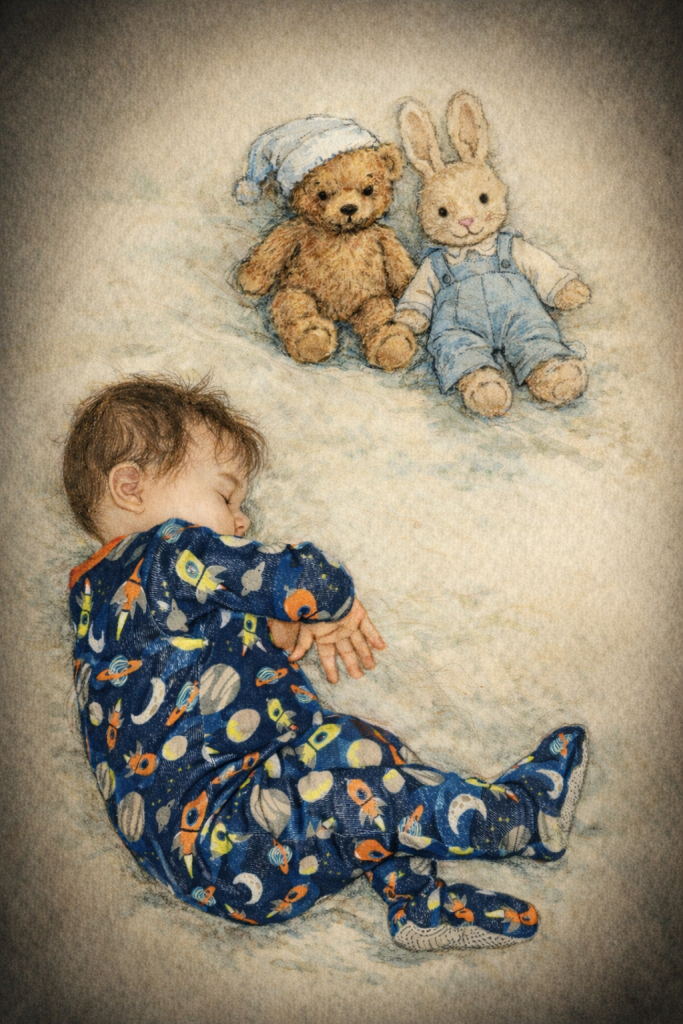
Harry: I know. I think about him every night. Just look at him. Look at him sleep. He’s so peaceful. Have you ever seen anything so perfect in your life?

Barry: Never.

Harry: I’m worried, Barry.

Barry: Worried?

Harry: I’m worried he’s changing too fast.

Barry: What do you mean?

Harry: I mean he’s perfect right now, right? So really any change is too much. Too fast. Too much, too fast.

Barry: Remember when he slept in the crib? Before the bed?

Harry: Oh yeah. I remember. He was so little then. They’d dress him up in those footie pajamas with the spaceships on them. Or that onesie with the owls. They were always so scared something might happen. Nothing else could be in the crib. They’d even put us up on the shelf at night. Then they’d lay on the floor and push their arms through the bars of his crib and feel his warmth. They’d fall asleep there to the steady rise and fall of his little chest with his little inhales and exhales.  

Barry: He was perfect then. He’s perfect now. He can change and still be perfect. 

Harry: But I don’t want change. Change is like how he used to hug me every night before falling asleep. Then one night: no hug. 

Barry: He hugged you tonight.

Harry: I mean, sure. He hugged me tonight. But it wasn’t a tight, tight hug. It wasn’t a—it wasn’t a—

Barry: A bear hug?

Harry: Yeah. That’s right. It wasn’t a bear hug. He used to wrap his arms around me at night and then squeeze with every muscle in his body. He used to sing while he’d rock me back and forth. He used to tuck me into his shirt before going to bed to “keep me warmed up through the night.”  

Barry: That was nice. He’s a caring boy. I’m glad he’s caring. Maybe we’ve made him more caring. He wasn’t always like that. Remember when he used to carry you around by your ears? 

Harry: Oh, don’t remind me! Back when he started crawling—if my ears weren’t in his mouth, they were clamped into his fist!

Barry: He dragged you across the floor so much your rump was going bald.

Harry: I’m glad that was just a phase! Can you imagine if he never stopped? Today I’d be Harry the Hairless Hare…It would be a whole Fuzzy Wuzzy situation.

Barry: Hey now—there’s nothing wrong with going bare.

Harry: Easy for you to say!

Barry: I’m just saying, change is inevitable. 

Harry: But what will happen in the future?

Barry: The boy will grow. It won’t always be perfect. But we’ll fill the boy up with care, and it will pour out of him as he grows up. Love will fill the cracks.

Harry: You know, last night I heard them talking. They said, “A child grows up in the blink of an eye.”

Barry: Maybe that’s why us stuffed animals never close our eyes.

Harry: Hmm. Maybe so.

Barry: Goodnight Hare.

Harry: Goodnight Bear.

Boy [murmuring in his sleep]: Good night room. Good night moon. 

Words That Matter

Matter is a read-it-later app.  I love it. You should download it. You’ll love it too.

Matter has become my alternative to mindlessly scrolling social media. I save essays into the app, then get rewarded with a reading queue of things that…Matter.


In the Matter App, you can follow favorite writers to discover new content. The Matter Company also created a set of standalone websites to surface great content through serendipity: Read Something Wonderful is a collection of high-quality essays. Listen to Something Wonderful is a collection of high-quality podcasts (did I mention the Matter App also transcribes podcasts?).

They also have a newsletter, Words That Matter, where each week a new celebrity curator shares 5-10 pieces of evergreen internet content they find meaningful or delightful. 

The newsletter is great. It’s a look into people’s tastes and how their thoughts are shaped. It’s rabbit-holes of inspiration. It’s a fun way to learn about people.

More people should do this.

In that spirit…


Words That Matter, To Me:

Essays that shaped my thoughts around parenting and learning and education:

Hugging the X-Axis by David Perell

This is a love letter to commitment. It convinced me to take writing online seriously and join David’s Write of Passage course. It made me intentional about nurturing the multi-decade relationships I want in my life – especially with my wife and sons.

Growth without Goals by Patrick O’Shaughnessy

My dad has been retired for almost 20 years. Everyday, he consults a notecard with five activities. It’s not a todo list of ambitious goals, just habits to maintain: read, write, take a walk, practice chess, study a language. Get a little better each day. 

I used to think this was cute in a dads-do-goofy-things sort of way. Patrick’s essay helped me appreciate the wisdom in my dad’s process. Chasing goals is a trap. Better to focus on cultivating the habits and practices that shape our lives. The rest will take care of itself. 

School Is Not Enough by Simon Sarris

My oldest son is almost kindergarten age. This piece, and Simon’s other essays, have helped shape my thoughts around what school can and cannot provide for my kids – especially around recognizing and growing their own agency.

Childhoods of Exceptional People by Henrik Karlsson

Henrik is also someone I admire as a thought leader of intentional parenting. What lessons can we learn from the childhoods of exceptional people, and how can we apply them to our own parenting practice? Henrik identifies tutoring and apprenticeships, but also “curating a rich intellectual milieu”. So new question: how can I make space for my smart friends (who are much smarter than me) to meaningfully interact with my kids?    

Here be Sermons by Kevin Simler

I bet sermons don’t work like you think they do. And I bet sermons are in more places than you think they are. At least, that’s what this essay did for me.

You Can’t Reach the Brain Through the Ears by Adam Mastroianni

Adam’s substack is wonderful. And he has quickly become my favorite EconTalk guest. 

This is about how hard it is to communicate ideas, and also how easy it is to fool ourselves into thinking we are communicating ideas when we are not, and yet also how his grandma can end an email with “be good” communicate everything perfectly. If the piece taught me anything, it’s that I can’t do a good job explaining it…so you should probably just go read it yourself. 

A Story About Tim Duncan by Shea Serrano

I love reading Shea Serrano for the way his voice pours through the page.

Shea’s sneaky about it, but this essay is really a list of things he was taught through example instead of words: show up, be a professional, take care of the people around you and they’ll take care of you. Reading it also makes me hungry for breakfast tacos.

Does My Son Know You? by Jonathan Tjarks

I cry every time I reread this. It is a beautiful, Christian witness.

Jonathan Tjarks, six months before he passed away, reflected on his terminal cancer diagnosis, his relationship with his own father who had passed away early, and his hope for the future of his family, including his 2-year-old son. “I didn’t need my dad’s money [when he died], but I could have used some of his friends,” echoes when I consider how to structure my own life as a parent.


A Word Calculator…What is GPT?

How Will It Improve the World? How Will It Not?


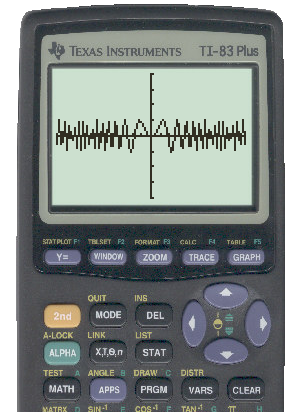
a humanoid computer from the 90’s playing chess digital art, DALL-E

When I was 12, my dad took some math classes at our community college.  The advanced material required a new calculator.  One night, he pulled me over to his homework table, “Look at this!”  He typed an equation, pressed enter, and a squiggly line darted from left to right like when the patient gets zapped back to life in an ER episode.  “Ba-Bump, Ba-Bump” my dad made sound effects as the line bent up and down across the screen.

At the time, I didn’t know what a sine curve was.  It didn’t matter.  The output was exciting.

Y=sin(x^2) …exciting was relative, pre-YoutTube

Years later, I took those same classes. The green LCD screens had become as ubiquitous in math as pencils.  Now I know what sine is.  I still don’t know how a TI-83 calculates it.  What happens in that black box when you press enter?  

If cryptocurrency was the conversation of 2022 (is that finally behind us?), GPT will be the conversation of 2023.  Perhaps you need a primer: GPT is a calculator for text.

What is GPT?

GPT (short for “Generative Pre-training Transformer”) is a type of artificial intelligence model that is used for natural language processing tasks such as language translation, summarization, question answering, and language generation. It is a deep learning model that was developed by OpenAI, and it is designed to be able to learn and generate human-like text.
…
I didn’t write that.  I typed “What is GPT?” into OpenAI’s ChatGPT, and it generated that output. 

Continue reading →